
What Is Swine Health Monitoring Software?
Definition and Background
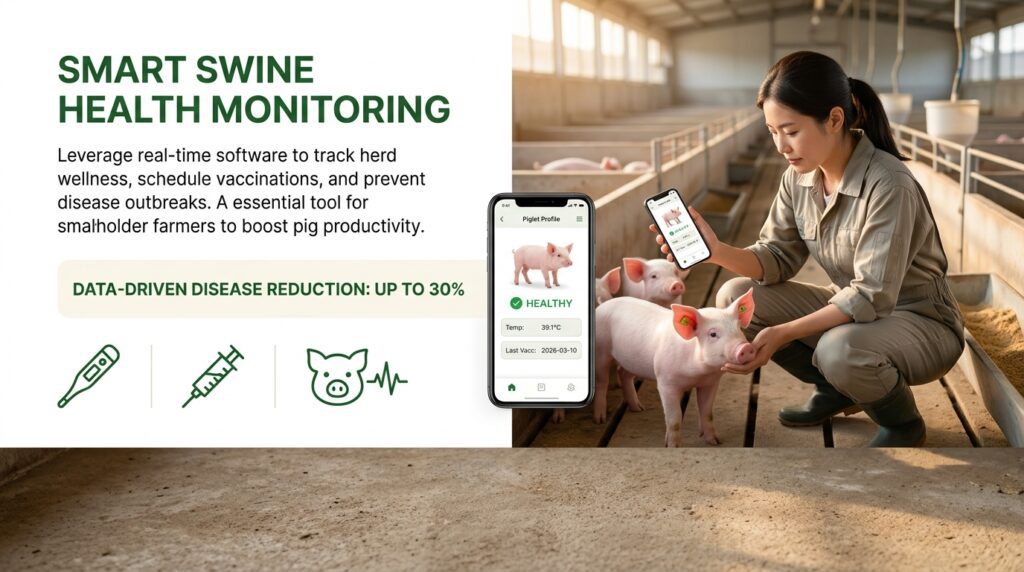
Swine health monitoring software is a digital tool designed to help pig farmers track, record, and analyse the health status of their herd in real time. Unlike paper-based systems or scattered spreadsheets, swine health monitoring software centralises vaccination records, treatment logs, weight measurements, illness reports, and breeding cycles in one accessible location. These platforms allow farmers to monitor individual animals or entire herds, set health alerts, and make data-driven decisions about herd management.
The technology behind modern swine health monitoring software ranges from simple mobile apps to sophisticated cloud-based systems. Most platforms allow farmers to record observations directly on their phone or tablet while working in the shed, eliminating the need for pen-and-paper documentation or manual data entry at the end of the day. The software then aggregates this information, identifies patterns, and generates reports that help identify health risks before they become costly problems. For smallholder farmers working with limited resources, swine health monitoring software has become an essential tool for maintaining herd wellness and farm profitability.
Why It Matters
Pig health management directly affects your bottom line. According to research from the National Pork Board, disease losses in pig farming can account for 10–15% of total production costs when prevention systems are inadequate. Swine health monitoring software reduces this risk by helping you catch illness early, track vaccination compliance, and prevent disease spread within your herd.
Beyond cost reduction, swine health monitoring software improves traceability. Many countries now require detailed health and treatment records for food safety certification, market access, and export eligibility. Manual record-keeping creates gaps and inconsistencies; digital systems provide an audit trail that demonstrates compliance and protects your farm’s reputation. Additionally, swine health monitoring software enables faster response to disease outbreaks. When you have real-time visibility into which pigs received which treatments and when, you can isolate sick animals, prevent transmission, and treat infections before they cascade through your operation.
If you’re managing herd health manually today, read our guide on swine health management to understand how structured approaches improve animal welfare and farm economics.
Key Benefits of Swine Health Monitoring Software
Primary Advantages
The benefits of swine health monitoring software extend across multiple areas of farm operation:
- Early Disease Detection. Real-time tracking of weight loss, feed intake changes, and behaviour anomalies flags potential health issues days or weeks before visible symptoms appear. Swine health monitoring software can set automatic alerts when key metrics deviate from baseline values.
Who Benefits Most
Swine health monitoring software is most valuable for smallholder and medium-scale pig farms operating with lean staffing. Farmers managing 50–500 animals struggle with manual tracking because the cognitive load is high and inconsistency is inevitable. A single missed vaccination or unrecorded health event can cascade into disease spread and financial loss.
Commercial operations also benefit significantly. Larger farms must demonstrate robust health protocols to retailers, processors, and certification bodies. Swine health monitoring software generates compliance reports automatically, reducing the administrative burden on farm managers and quality assurance staff. Farms exporting pork or seeking premium certifications (organic, high-welfare, antibiotic-free) rely on swine health monitoring software to prove their standards to third parties.
Emerging market farms—where veterinary services may be scarce and communication with advisory networks is critical—benefit from the diagnostic insights that swine health monitoring software provides. Many modern platforms include herd benchmarking, allowing you to compare your health metrics against regional or national averages.
How to Get Started with Swine Health Monitoring Software
Step-by-Step Overview
Step 1: Choose the Right Platform. Evaluate swine health monitoring software options based on your herd size, technical skill level, and budget. Look for platforms that offer mobile access (essential for farm-floor use), offline data entry, and automatic cloud synchronisation. Many swine health monitoring software providers offer free trials; use this period to test the user interface and confirm it suits your workflow.
Step 2: Set Up Your Herd Profile. Enter basic information: herd size, breed composition, vaccination protocol, treatment standards, and key performance targets. This baseline data allows swine health monitoring software to generate alerts when individual animals or groups deviate from your farm’s norms.
Step 3: Assign Animal Identifiers. Each pig needs a unique ID—ear tag number, pen assignment, or barcode. Swine health monitoring software links all health records to these identifiers, ensuring you never confuse one animal with another.
Step 4: Input Historical Records. If you have existing paper records, take time to digitise them. This historical data helps swine health monitoring software establish baseline health patterns and makes the transition less disruptive. Prioritise recent months; older records are less critical.
Step 5: Train Your Team. Every person handling pigs must know how to log observations in the software. Swine health monitoring software is only as good as the data entered. Spend time with staff on the mobile app’s interface, troubleshooting, and the importance of timely data entry.
Step 6: Start Recording Daily. Begin logging health observations during your next farm walk. Record vaccination dates, treatment administration, weight changes, feed refusal, and any visible illness signs. Consistency is critical for swine health monitoring software to deliver reliable insights.
Tools and Resources You Need
To run swine health monitoring software effectively, have these tools on hand:
- Mobile Device. A smartphone or tablet with good battery life and water resistance (farm environments are tough). Most swine health monitoring software requires iOS or Android; confirm compatibility before purchase.
- Internet Connectivity. Stable WiFi in your office and mobile signal (or cellular backup) for real-time data sync. Swine health monitoring software that supports offline mode is valuable if your farm has poor coverage.
- Animal Identification System. Ear tags, pen numbers, or RFID readers allow swine health monitoring software to link records to individual animals. Invest in a durable identification system compatible with your software.
- Veterinary Input. Partner with your vet to establish the vaccination, worming, and treatment protocols that swine health monitoring software will track. Your vet can also help interpret the data and recommend herd management adjustments.
- Training Materials. Most swine health monitoring software providers offer video tutorials, user manuals, and email support. Budget time for team training before go-live.
Common Mistakes to Avoid When Using Swine Health Monitoring Software
Mistake #1: Inconsistent or Incomplete Data Entry
The most common pitfall is treating swine health monitoring software as optional. Farmers start with enthusiasm, log data for a few weeks, then revert to sporadic recording when workload increases. Swine health monitoring software cannot deliver insights without consistent input. When only 60% of health events are logged, the system misses disease patterns and generates unreliable alerts.
Solution: Make data entry non-negotiable. Assign a specific person to log health observations each day, or build it into your standard farm walk routine. Set a reminder on your phone to open swine health monitoring software at the same time each day. Keep the interface simple—enter only essential data initially (animal ID, symptom, treatment given, date). Complexity can wait until the habit is established.
Mistake #2: Ignoring Software Alerts and Ignoring Veterinary Guidance
Some farmers implement swine health monitoring software but don’t act on its warnings. If the system flags a pig with unusual weight loss or repeated respiratory signs, that signal deserves investigation. Ignoring alerts defeats the purpose of the software and wastes your investment.
Additionally, swine health monitoring software is a complement to veterinary care, not a replacement. The software identifies anomalies; your vet diagnoses and prescribes treatment. Failing to involve your vet in interpreting swine health monitoring software data leads to delayed treatment and poor herd outcomes.
How to Prevent Them
Establish a routine. Schedule a 15-minute daily check-in with swine health monitoring software at the same time every day. Use that time to review alerts, confirm treatments, and record new observations. At week’s end, spend 30 minutes reviewing the software’s summary report. Are there emerging disease clusters? Which pigs are underperforming? Are vaccination rates on track? This rhythm transforms swine health monitoring software from a data dump into an active management tool.
Second, schedule monthly calls with your veterinarian to review swine health monitoring software reports together. Your vet can explain trends, validate your interpretation, and recommend preventive steps. This partnership ensures you’re extracting maximum value from the system.
Tips for Getting the Best Results from Swine Health Monitoring Software
Pro Tips
Use Benchmarking Features. Most swine health monitoring software platforms include benchmarking tools that compare your herd’s metrics (mortality rate, average daily gain, vaccination compliance, treatment frequency) against regional or national averages. This comparison reveals where your farm excels and where improvement is needed. If your mortality rate is 8% but the industry average is 4%, swine health monitoring software data justifies a deeper investigation or investment in preventive health measures.
Set Customised Alerts. Configure swine health monitoring software to send notifications when specific conditions occur: a pig loses 2kg in one week, three animals in the same pen show respiratory signs, or a vaccination is overdue. Alerts turn passive data collection into active monitoring. In our experience testing farm management platforms, farms that customise alerts catch disease outbreaks 2–3 days earlier than farms that check reports manually.
Track Antibiotic Use Precisely. Many regions now require documentation of every antibiotic dose administered, including the drug name, dose, route, and treatment duration. Swine health monitoring software automates this compliance burden. Record not only when you treat but why—which symptoms prompted the decision. This detail helps your vet identify patterns (e.g., recurrent respiratory disease linked to poor ventilation) rather than assuming each outbreak is independent.
Integrate Feed and Weight Data. Some swine health monitoring software systems link to feed dispensing equipment or weight scales, auto-populating consumption and weight data. If your software offers this integration, use it. Automated data reduces manual error and gives you real-time visibility into feed conversion ratios and growth rates. Pigs gaining slowly or eating poorly are often sick before other signs appear.
Advanced Techniques
Predictive Health Scoring. As you accumulate months of data in swine health monitoring software, look for predictive patterns. Which early indicators—subtle weight loss, feed refusal, behavioural change—reliably precede full illness? Once identified, teach your team to spot these pre-clinical signs. Swine health monitoring software becomes a training tool, reinforcing the farm’s collective knowledge about your specific herd’s health behaviours.
Breeding Selection Based on Health History. Use swine health monitoring software to compare health outcomes across sires and dams. Some breeding lines may show consistently lower disease incidence or faster recovery. Prioritise breeding from your healthiest genetics. Over multiple generations, this selective breeding, supported by swine health monitoring software data, shifts your herd toward greater disease resilience.
Collaborative Reporting. Many swine health monitoring software platforms allow you to share reports with your veterinarian, nutritionist, or buyer via secure links. This transparency builds trust with your supply chain partners and opens dialogue about herd management. Some farmers also use anonymised swine health monitoring software reports to benchmark against peer farms in farmer discussion groups, learning from others’ successes and challenges.
If you’re ready to streamline herd health tracking, explore the best pig health management apps available for smallholder farmers, or start with PigPal, which combines swine health monitoring software features with breeding schedules, vaccination tracking, and profitability metrics.
Frequently Asked Questions About Swine Health Monitoring Software
Q: Is swine health monitoring software worth the cost for small farms?
A: Yes, especially if you operate 50+ animals. A single disease outbreak prevented or caught early often pays for a year’s subscription. Swine health monitoring software also reduces the time spent on paperwork, freeing you for other income-generating activities. Even free or low-cost options (many offer entry-level tiers) are worth testing.
Q: Do I need an internet connection for swine health monitoring software to work?
A: Not constantly. Most modern swine health monitoring software apps work offline, syncing data to the cloud when connection is restored. This is essential for farm environments where WiFi coverage is intermittent. Check this feature before choosing a platform.
Q: Can swine health monitoring software replace my veterinarian?
A: No. Swine health monitoring software is a monitoring and record-keeping tool. It flags anomalies and ensures compliance; it does not diagnose disease or prescribe treatment. Always consult your vet when unusual patterns appear. Think of swine health monitoring software as the eyes and ears of your farm, and your vet as the mind that interprets what they see.
Q: Which swine health monitoring software is best for emerging markets?
A: Look for platforms that support low-bandwidth operation, offline functionality, local language support, and integration with regional veterinary networks. Mobile-first design is critical; many smallholder farms in emerging markets have smartphones but limited internet. Platforms that include templates for common regional diseases and link to local veterinary advisors are especially valuable.
Q: How long before swine health monitoring software shows results?
A: Early improvements (better disease detection, vaccination compliance) appear within weeks. Deeper insights—breeding selection data, seasonal pattern identification—emerge over months. Commit to consistent data entry for at least three months before evaluating swine health monitoring software’s impact on herd health metrics.
Q: Does swine health monitoring software work for grazing or extensive systems?
A: Yes, though tracking is more challenging. Mobile-friendly swine health monitoring software with offline capability is essential. Some farmers use GPS-tagged ear tags alongside swine health monitoring software to monitor pig location and detect sick animals that isolate themselves. Ask vendors whether their swine health monitoring software is field-tested in extensive systems.
Swine health monitoring software has become standard practice in professional pig farming. Whether you’re a smallholder managing 100 animals or a commercial operation with thousands, the right software transforms health data from scattered notes into actionable intelligence. Start small, stay consistent, and partner with your veterinarian to extract maximum value from your system.
Take the next step: Try it free — no credit card required.
Manage Your Pig Farm from Your Phone
PigPal makes farm management simple — track vaccinations, breeding cycles, feed costs, and pig weights all in one app designed for small and commercial pig farmers.
Get PigPal Free →
More in this series
- PigPal Health Tracking Features: Complete Guide for Pig Farmers (2026)
- 7 Best Pig Health Management Apps for Smallholder Farmers 2026
- PigPal vs Manual Record Keeping: 5 Key Differences for Pig Farmers (2026)
- PigPal — The Best Piggery Management App in 2026
Get new posts by email
Pick the topics you care about — we only email you when something new is published in them.